An advanced technological solution to improve training, information and the patient journey in the Life Sciences sector.
In a context where communicative clarity is essential for therapeutic effectiveness and the quality of the doctor-patient interaction, the availability of innovative tools can represent a competitive advantage for pharmaceutical companies, healthcare organizations and scientific training providers.
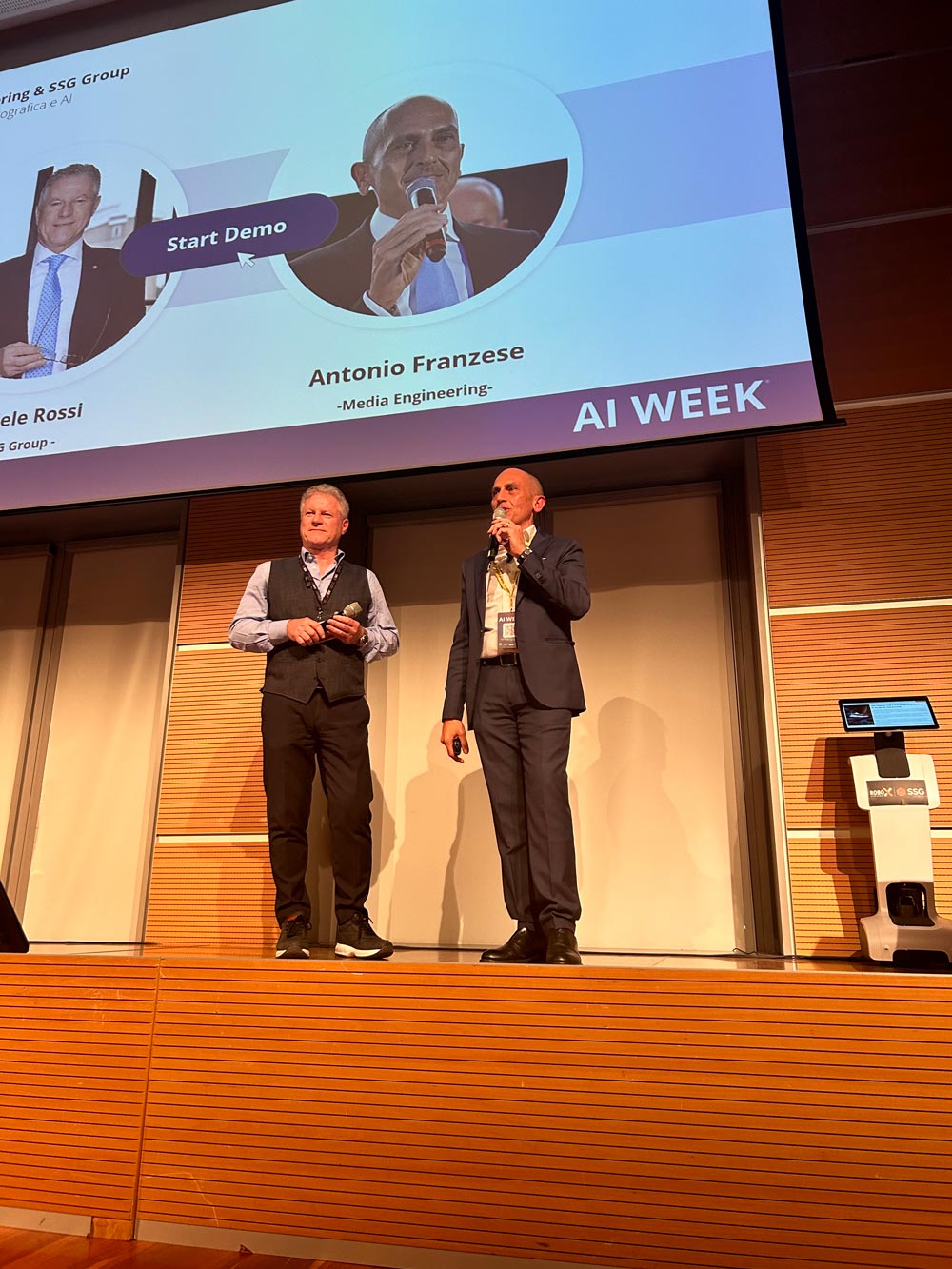
Media Engineering has developed an interactive solution that combines holography, conversational artificial intelligence and a digital interface, designed to make clinical communication more effective, understandable and engaging.
A synergistic system: physical interaction, immersive visualization, generative AI
The solution is based on a triple technological integration.
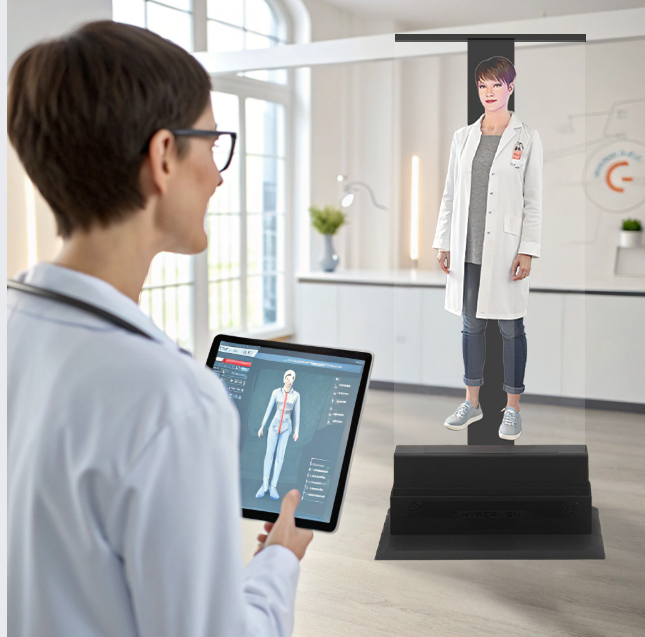
1. Tablet with a 3D map of the human body
Through an intuitive touch interface, the user (doctor, sales rep, trainer or patient) can select specific areas of the human body (e.g. shoulder, chest, leg). Each selection is geolocated on a visual hotspot.
On click, a realistic visual content is activated, for example a lesion, a side effect, a visible pathology.
2. Real-time holographic avatar
In parallel, a holographic AI avatar is physically projected through holographic technology. The character comes to voice and begins an explanation synchronized with the content selected on the tablet. The tone is medical, yet accessible.
3. Conversational AI for deeper insights
The most advanced element of the solution is the ability to interact directly with the avatar, activating a generative AI module: the system can answer questions, provide clinical details or expand the information in real time, based on the content displayed.
This enables a true medical-digital conversation, where the avatar becomes a virtual clinical assistant, able to educate, explain and accompany.
Where it applies
The solution is designed to integrate naturally into different professional contexts. It can be used in medical and scientific training, for example by sales reps and MSLs, to make presentations more effective, clear and visually memorable.
At congresses and clinical demos, it's an innovative tool to show, immediately, how a treatment works, the action of a drug or the evidence of a lesion.
In doctor-patient communication too, this tool proves extremely useful: it helps to explain therapy better, reduces the communicative distance and can foster greater adherence from the patient.
Finally, it finds application in onboarding, within wards, clinics or rehabilitation centers, to introduce therapeutic pathways in a more engaging and understandable way.
The benefits for those who adopt it
Using this technology means offering a communicative experience that is more engaging, but also more functional. The ability to combine visual elements and real-time explanations improves the understanding of clinical content and captures the listener's attention more easily.
For healthcare staff, it's a valuable support to lighten the explanatory load and optimize time.
From a strategic point of view, it integrates easily with phygital activities, training moments and branded content, reinforcing the positioning of those pharma companies that want to stand out in the way they communicate innovation too.
Bring interactive holography and AI into your clinical communication
The technology is already available and customizable by therapeutic area, language, brand and interaction. Write to us to discover how to integrate it into your projects.
Contact us →