Discover how artificial intelligence is revolutionizing the way companies operate and communicate.
In today’s technological landscape, artificial intelligence (AI) has become one of the driving forces revolutionizing the way companies are managed and operated. This powerful technology, which simulates human intelligence through algorithms and computers, offers a range of extraordinary advantages that go far beyond traditional applications.
What is Artificial Intelligence
Here’s the translation:
What is Artificial Intelligence
Artificial intelligence (AI) is a field of computer science focused on creating systems and programs capable of performing tasks that typically require human intelligence. These systems are designed to simulate some of human cognitive abilities, such as reasoning, learning, pattern recognition, natural language understanding, and visual perception. The goal of AI is to develop machines capable of performing complex intellectual tasks autonomously or with human assistance.
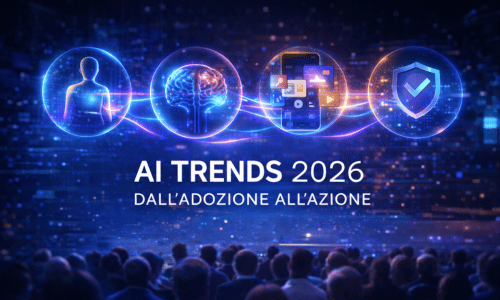
But how does AI actually work? Artificial intelligence (AI) operates on four main functional levels, each of which contributes to the creation of intelligent systems capable of understanding, reasoning, learning, and interacting with the surrounding environment.
1. Understanding The first functional level of AI concerns the ability to understand and interpret data and information from the surrounding environment. This involves pattern recognition, perception of sensory stimuli, and natural language understanding. AI algorithms use data processing techniques, computer vision, and natural language analysis to translate data into comprehensible information.
2. Reasoning The second functional level of AI involves reasoning and the ability to draw logical conclusions from the information understood. This level allows AI systems to make decisions based on rules, logical inferences, or historical data. Reasoning can be based either on predefined rules or on machine learning algorithms that identify relationships and patterns in data.
3. Learning The third functional level is the heart of modern AI. It involves the ability to learn automatically from data. Machine learning algorithms, such as artificial neural networks, are trained on large amounts of data to autonomously identify patterns and relationships. This allows AI systems to improve their performance and adapt to new situations without having to be explicitly programmed for every scenario.
4. Interaction The fourth functional level concerns the ability to interact with the environment or with human users in a natural and meaningful way. This involves the use of technologies such as virtual assistants, chatbots, and AI agents that can understand user requests and questions, respond coherently, and carry out specific tasks. Interaction can occur through natural language, voice recognition, image processing, or other means.

The Rise of AI in Business
The rise of artificial intelligence (AI) in business has been one of the most significant trends in the corporate world in recent years. Companies are increasingly adopting AI to improve operational efficiency, make more informed decisions, and develop new products and services. Here are some ways AI is being used in business:
- Business process automation: Companies use AI to automate a wide range of business processes, such as inventory management, document processing, data management, and customer response via chatbots. This increases operational efficiency and reduces costs.
- Data analytics: AI is used to analyze enormous amounts of business data and identify patterns, trends, and insights that would be difficult to detect manually. This helps companies make more informed decisions and develop more effective business strategies.
- Customer Relationship Management (CRM): Companies use AI in their CRM systems to improve customer management. AI can help identify potential leads, personalize customer interactions, anticipate customer needs, and improve customer support through chatbots and virtual assistants.
- Marketing and advertising: AI is used in marketing to analyze consumer behavior and create more targeted advertising campaigns. Personalizing offers and advertising messages based on customer data has become very common thanks to AI.
- Production and logistics: Companies use AI to optimize production and supply chain management. For example, they can use AI to forecast product demand, plan production based on that demand, and optimize delivery routes.
- Healthcare: In the healthcare sector, AI is used to improve medical diagnosis, patient data management, and clinical research. AI systems can help doctors identify conditions more accurately and personalize treatment plans.
- Finance: In the financial sector, AI is used to analyze financial markets, forecast price trends, and assess financial risk. In addition, financial services companies use chatbots and virtual assistants to improve customer support and process automation.
- Cybersecurity: AI is used to protect companies from cyberattacks. AI-based security systems can detect and mitigate cyber threats in real time.
In summary, AI is revolutionizing business management across multiple sectors, enabling companies to become more efficient, competitive, and capable of quickly adapting to changing market conditions. However, it is important to note that implementing AI systems requires careful planning and responsible data management to ensure the security and privacy of both customers and employees.

AI in the Global Market: Growth, Impact, and Concerns
The Artificial Intelligence (AI) market is experiencing extraordinary growth, with forecasts indicating an increase to $407 billion by 2027, compared to an estimated $86.9 billion in 2022. AI is revolutionizing various sectors, with AI’s expected contribution to global GDP projected to increase by 7% by 2033.
However, this growth is accompanied by concerns about employment, with fears that AI could cause job losses for 400 million workers by 2030. At the same time, AI is expected to create 97 million new jobs, helping to offset those losses.
Companies are adopting AI to:
- improve productivity,
- optimize business processes,
- improve customer relationships.
China leads in AI adoption, but there are also concerns about technology dependency and a lack of technical skills. Despite these concerns, trust in companies that use AI remains solid, with 65% of consumers continuing to trust them. Furthermore, more than half of respondents believe that AI can improve the quality of written content, demonstrating the potential of this technology in optimizing creative and productive processes.
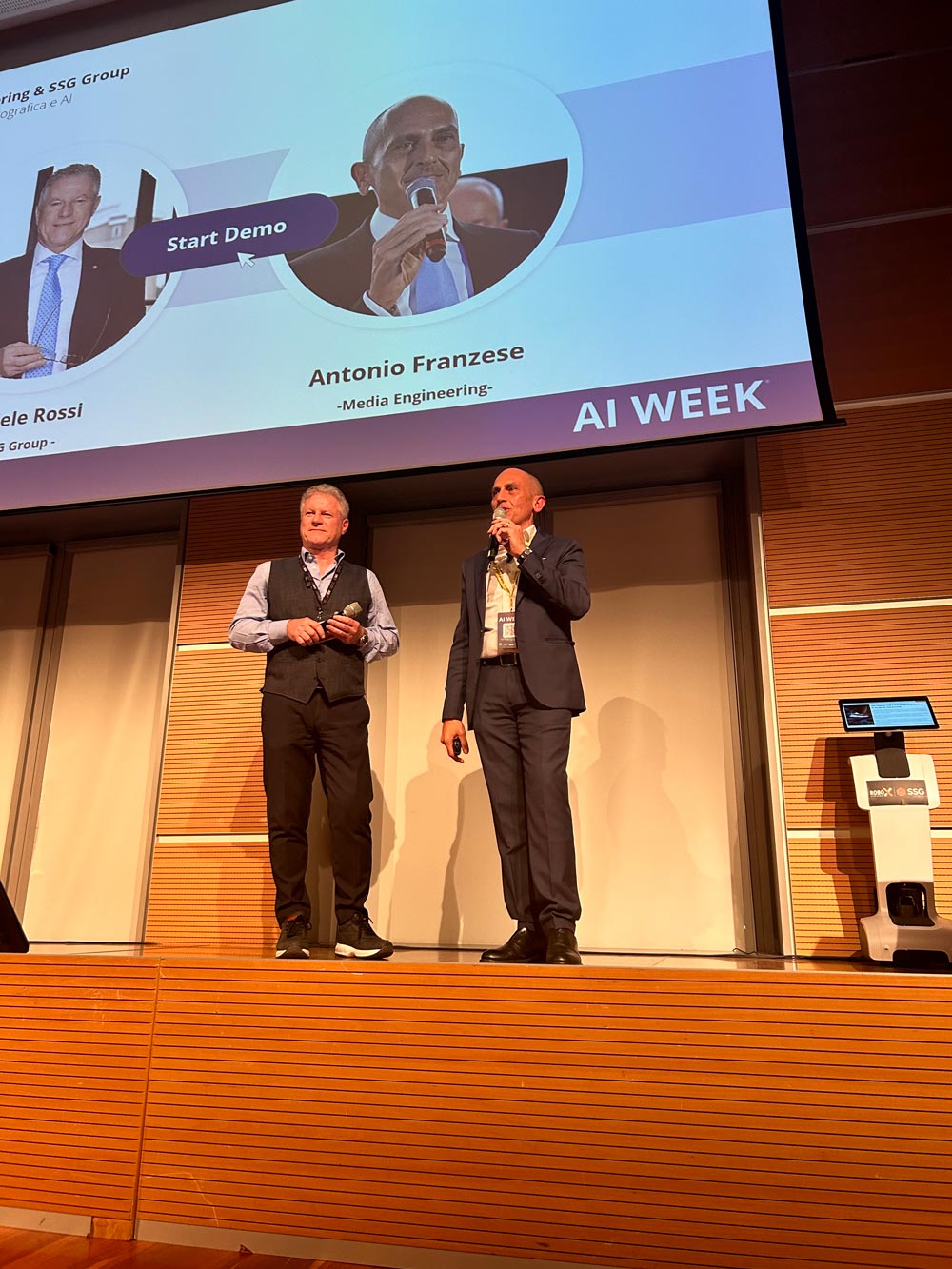
Media Engineering Integrates AI and Holography for Engaging Learning
In the era of Artificial Intelligence (AI), an extraordinary innovation is transforming the way we interact and learn. The integration of holograms with AI has brought holographic avatars to a new level of interaction, paving the way for previously unseen scenarios.
This cutting-edge technology combines AI with three-dimensional visual representation, giving life to avatars capable of simulating conversations on a wide range of topics.
Interested in this topic? Visit our dedicated page.
But what makes these holographic avatars so extraordinary?
Holographic avatars are not simply visual representations, but true virtual interlocutors. Thanks to AI, they are able to engage people in direct conversations, using natural language and asking relevant questions. The experience is so realistic that one could easily forget they are interacting with a virtual entity.
The possibilities offered by this combination of technologies are extraordinary. In a business context, holographic avatars can improve customer interaction, automate customer support, and even be used for internal training purposes. Imagine a virtual avatar guiding customers through a troubleshooting process or providing personalized assistance 24/7.
But the applications go far beyond the business world. Virtual learning is undergoing a revolution thanks to holographic avatars. This technology offers an engaging and interactive learning experience like never before. Students can now interact with a virtual tutor who appears to be physically present, answering their questions and providing explanations in real time.
The combination of holograms and AI is pushing the boundaries of virtual learning. The cutting-edge solutions that are emerging help people learn effectively and engagingly. In a constantly evolving world, AI is proving to be a powerful ally for learning and interaction, bringing training and business support to a level never seen before

Conclusion
In conclusion, Artificial Intelligence is revolutionizing the way companies operate. Thanks to continuous technological advances, such as the use of AI in holography to create advanced conversational avatars, businesses are improving efficiency, customer experience, and their ability to quickly adapt to market needs. The adoption of AI has become a necessity to remain competitive, and companies that embrace this technology will be ready to face the challenges and seize the opportunities of the future