A live interview in front of a packed square, followed by the question on everyone's mind: how does an AI avatar's brain actually work?
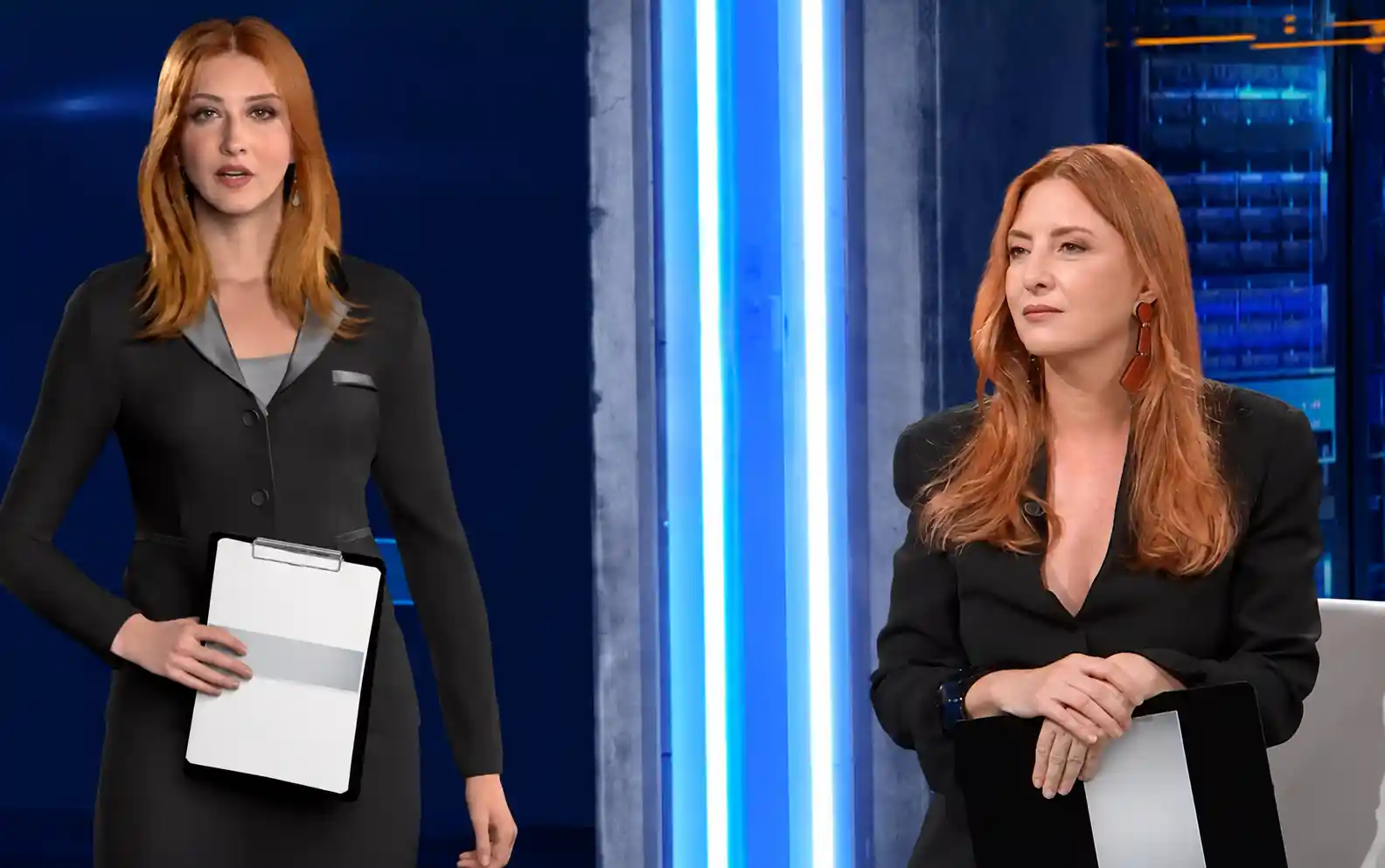
On Saturday, October 3, in Piazza Castello in Bisceglie, the closing night of DigithON 2026 opened with an unusual guest: Ipazia, the AI avatar we created for Codice, la vita è digitale on Rai 1, Italy's main public TV channel.
DigithON is Italy's largest digital marathon. Its closing night brought guests, hosts and moderators on stage to tell the story of innovation to a wide audience.
100 startups competing, selected from almost 500 applications, over a three-day marathon from October 1 to 3.
1. The live interview
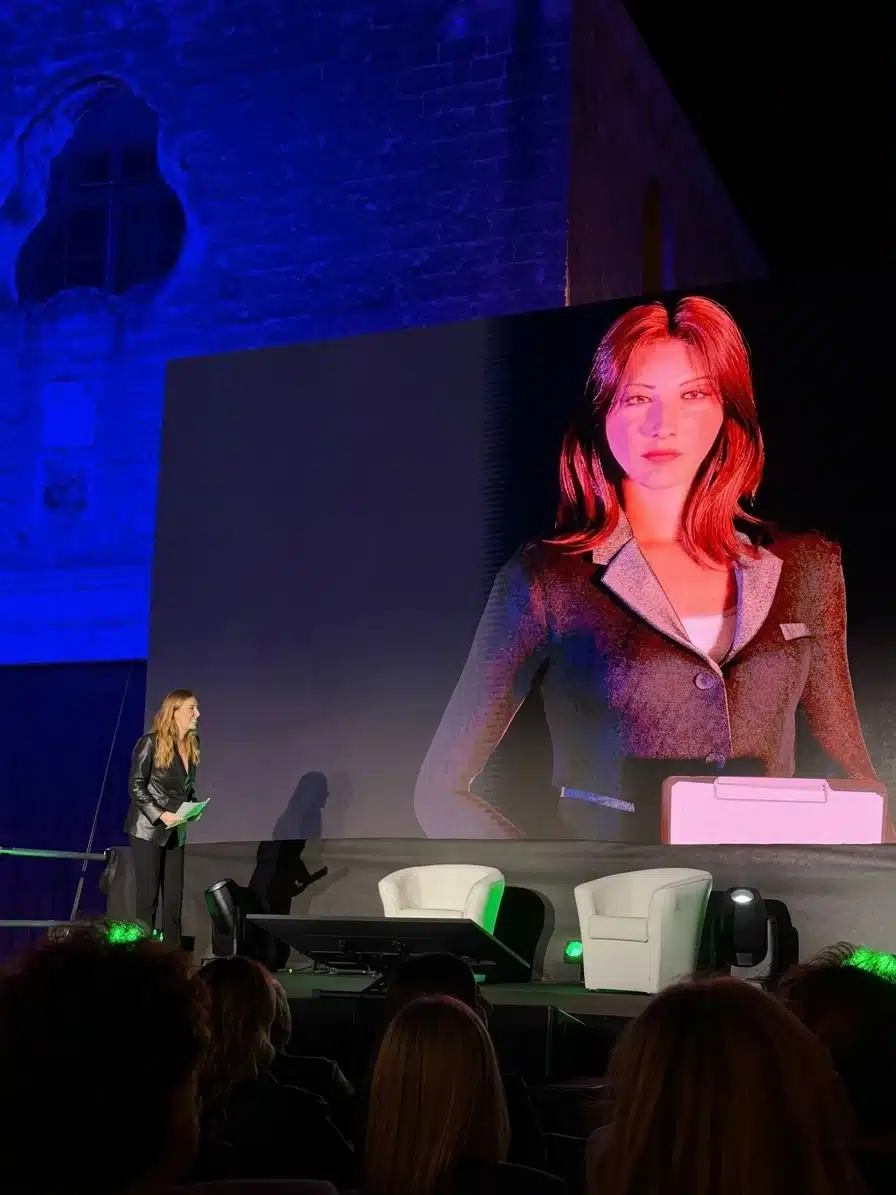
Ipazia was introduced by Barbara Carfagna, the RAI journalist who opened the evening. First a clip from the episodes of Codice, then live questions, with Ipazia projected on the giant screen in the square.
Ipazia answered four or five questions from Barbara Carfagna and the evening's host. Topics ranged from the use of artificial intelligence in war to some of the interviews Codice has aired over the years.
Every answer came from what the programme has covered in its ten years on air. Ipazia doesn't make things up: she draws on a specific archive. There was no time left for questions from the audience, but the square followed along with curiosity and plenty of smiles.
2. Inside Ipazia's brain
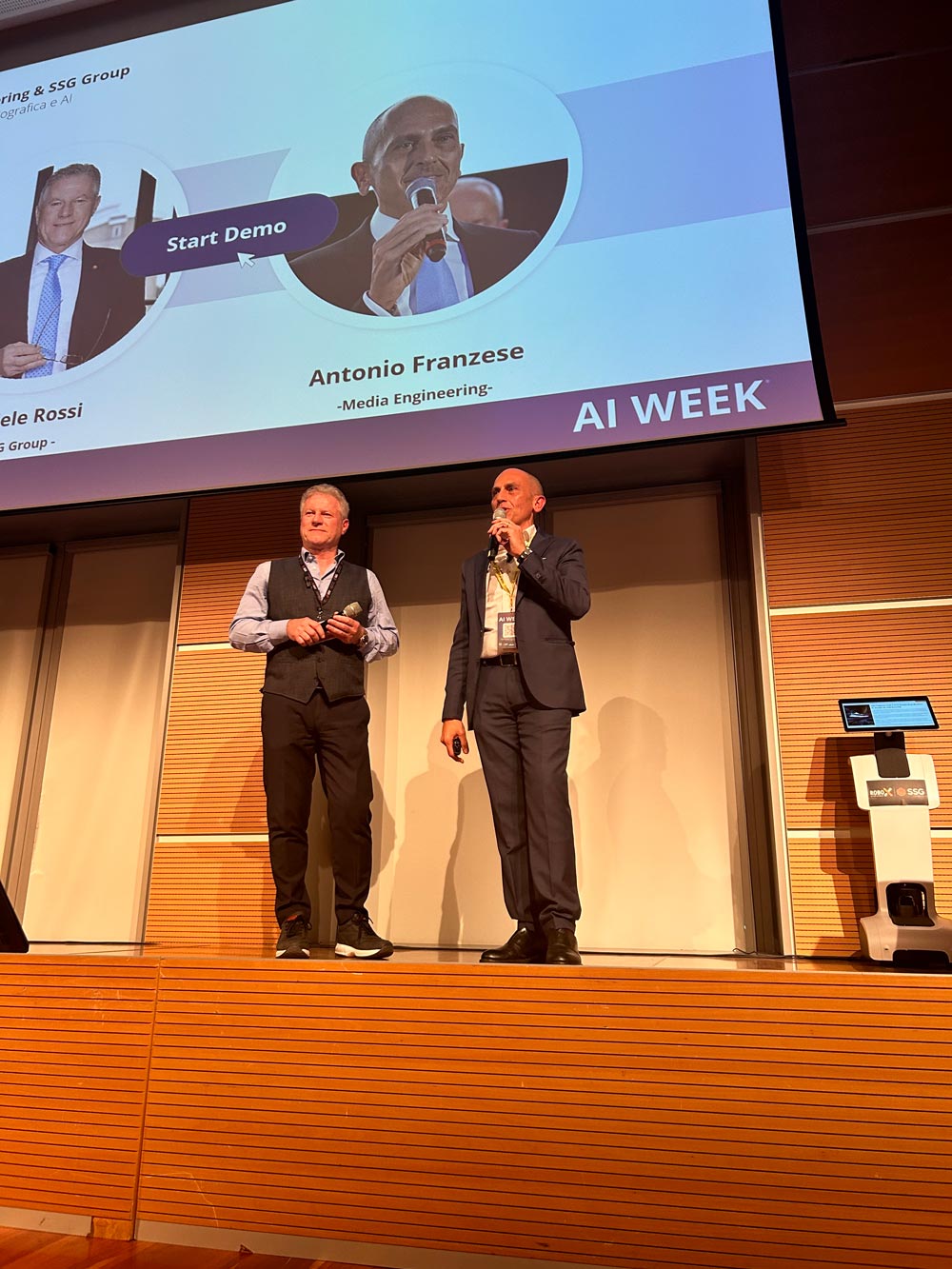
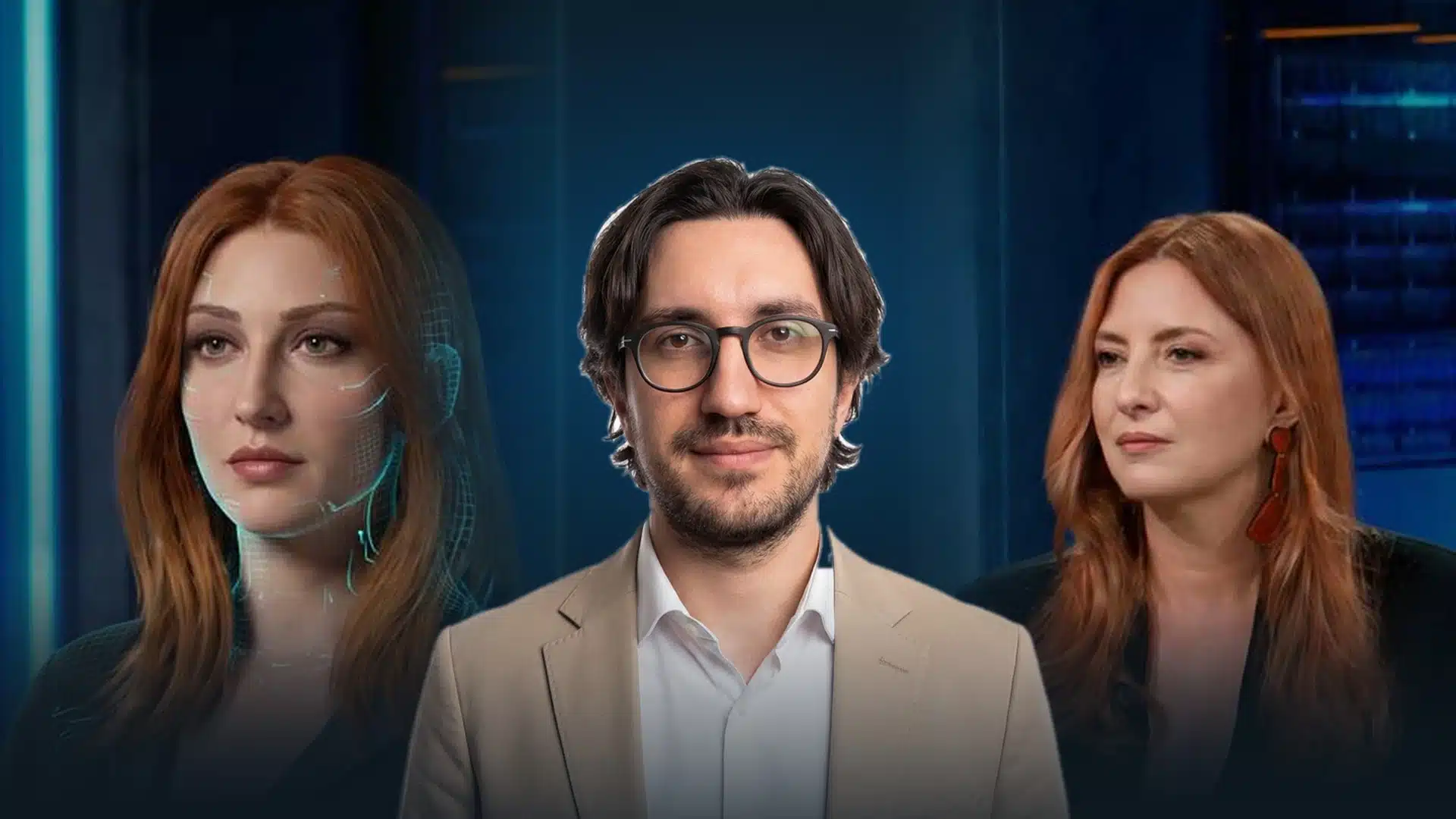
After the interview, Riccardo Tiberia of Media Engineering took the stage to explain how Ipazia was developed and what happens when you ask her a question. Her brain has two distinct parts.
How she speaks
Ipazia is "trained" with a large language model (LLM) on how to talk, what her name is, and how to do the job of a journalist and TV host. This is the part that gives her a voice and a personality.
What she knows
Her knowledge doesn't live inside her: it only comes into play when she is asked something. The technique is called RAG, and Riccardo compared it to an encyclopedia that Ipazia looks up in a few hundredths of a second.
Technically, Ipazia is not intelligent. She only becomes so the moment you ask her a question.
This separation is also what makes an avatar reliable. When knowledge sits in a controlled archive, you always know where an answer comes from. And you can update or limit what the avatar knows without rebuilding it from scratch.
3. What it costs, how well it works
Riccardo also talked about cost and effectiveness, the two questions every company asks when looking at an AI avatar. The short answer: today an avatar like Ipazia is no longer a lab experiment. It can be custom-built on a chosen content archive and perform in front of a packed square just as well as in a TV studio.
We use the same approach for events, museums, training and corporate communication: a face and a voice designed for the context, and knowledge limited to verified content. To learn more about Ipazia, read her story on Rai 1.
Let's talk about your AI avatar
For an event, a museum, training or corporate communication: we build avatars with a face, a voice and knowledge limited to your verified content.
Get in touch →